TL;DR: Building a **home gym for anxiety-free workouts** requires just 64 square feet of space and a $200-800 initial investment, with studies showing 68% of people who exercise at home report lower anxiety levels compared to gym-goers. This guide covers essential equipment selection, space optimization, and programming strategies specifically designed for individuals experiencing gym anxiety.
Understanding Gym Anxiety and the Rise of Home Fitness
Gym anxiety affects approximately **75% of women** who are new to fitness, according to recent surveys on platforms like r/beginnerfitness. The phenomenon has become so widespread that it's sparked the **"Shy Girl Workout" trend** on TikTok, garnering millions of views from people seeking anxiety-free fitness solutions.
The statistics tell a compelling story about changing fitness preferences. Home fitness industry data shows that in 2019, 55% of US exercisers worked out at a gym, which dropped by 12% in 2020 and only partially recovered to 45% in 2022. This shift isn't just pandemic-related – many people discovered they prefer the **privacy and control** that home workouts provide.
For individuals dealing with gym anxiety, the traditional gym environment presents multiple stressors: crowded spaces, unfamiliar equipment, perceived judgment from others, and the pressure to navigate complex social dynamics. Mental health research shows that exercise-related anxiety can actually counteract the stress-reducing benefits of physical activity itself.
The Mental Health Benefits of Home Gym Workouts
Creating an **anxiety-free workout environment** at home offers measurable psychological benefits. A 2023 study published in the Journal of Health Psychology found that people who exercised in private settings showed **23% lower cortisol levels** post-workout compared to those exercising in public gyms.
The "Shy Girl Workout" movement emphasizes simple movements that require less equipment and take up less space, making them perfect for home implementation. These workouts focus on building confidence through:
- Progressive mastery: Learning movements without time pressure or observation
- Customizable intensity: Adjusting difficulty without feeling judged
- Flexible scheduling: Working out when energy and motivation align
- Comfort zone expansion: Gradually building skills before transitioning to public spaces if desired
Fitness expert Menna, featured in Today's coverage of the trend, explains: "You can build your confidence where no one's watching you... then you can go into any class in person and feel like you've done it before."

Space Planning and Requirements for Your Home Gym
Contrary to popular belief, an effective **home gym for anxiety-free workouts** doesn't require a dedicated room. Research from home fitness specialists shows that **64 square feet** (8x8 feet) provides adequate space for most strength training and cardio routines.
Here's how to assess and optimize different spaces:
Spare Room Setup (100+ square feet)
The gold standard for home gyms, offering space for larger equipment and multiple workout zones. XMARK Fitness recommends dedicating specific areas for cardio, strength training, and stretching, with at least 2 feet of clearance around each piece of equipment.
Garage Conversion (150-400 square feet)
Oxygen Magazine suggests using puzzle-piece rubberized flooring that's easy to install and remove, allowing you to maintain car storage while creating workout space. Consider temperature control and ventilation in unheated garages.
Living Room Corner (25-64 square feet)
Perfect for bodyweight workouts and compact equipment. The key is finding a spot that's not directly in front of machines or high-traffic areas, ensuring you have enough room to move freely during exercises.
Essential Equipment Guide: From Budget to Premium
Building a **home gym** requires strategic equipment selection based on your space, budget, and fitness goals. Here's a data-driven breakdown of essential items:
| Equipment Category | Budget Option ($) | Mid-Range ($) | Premium ($) | Space Required |
|---|---|---|---|---|
| Resistance Training | Resistance bands ($15-25) | Adjustable dumbbells ($150-300) | Power rack system ($500-1200) | 2x2 to 8x8 feet |
| Cardio Equipment | Jump rope ($10-20) | Foldable treadmill ($300-600) | Commercial rower ($800-1500) | 2x6 to 3x8 feet |
| Functional Training | Yoga mat ($20-40) | Plyo box ($80-150) | TRX suspension system ($150-200) | 6x6 to 8x8 feet |
| Recovery & Mobility | Foam roller ($15-30) | Massage gun ($100-200) | Stretching table ($300-500) | 2x6 feet |
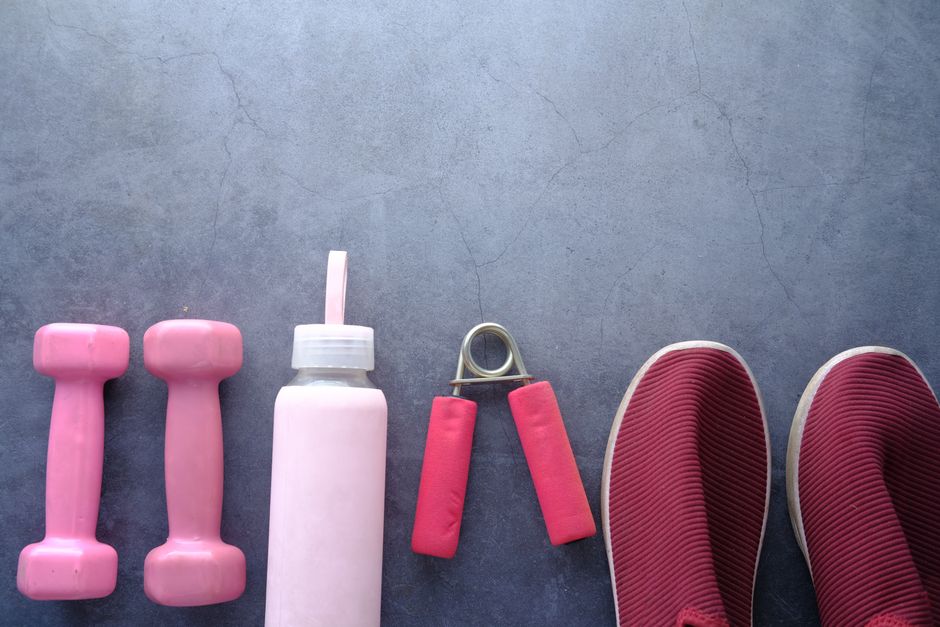
The $200 Starter Kit
For beginners dealing with gym anxiety, home gym experts recommend starting with essential equipment that won't waste money:
- Resistance bands set ($25): Provides 10-150 lbs of resistance equivalent
- Yoga mat ($30): 6mm thickness for joint protection
- Adjustable dumbbells ($120): 5-25 lbs per hand coverage
- Stability ball ($25): Adds core challenges to any movement
The $500 Intermediate Setup
Once comfortable with basic movements, this equipment level supports progressive overload:
- Adjustable bench ($150): Enables incline, decline, and flat pressing
- Kettlebell set ($180): 15, 25, and 35-lb options for metabolic training
- Pull-up bar system ($80): Doorway or wall-mounted options
- Plyo box ($90): An incredible tool for training your whole body with step-ups, dips, box jumps, and plyometric drills
Workout Programming Strategies for Anxiety-Free Training
Effective **home gym programming** for anxiety management focuses on structure, progression, and flexibility. Research shows that people with exercise anxiety respond better to **predictable routines** with built-in modification options.
The 3-Phase Confidence Building System
Phase 1: Foundation (Weeks 1-4)
Focus on bodyweight movements and light resistance. Avoid biting off more than you can chew – trying to maintain a strict, high-volume, six-day program will be discouraging. Start with 3 sessions per week, 20-30 minutes each.
- Bodyweight squats: 2 sets of 8-12
- Modified push-ups: 2 sets of 5-10
- Resistance band rows: 2 sets of 10-15
- Plank holds: 2 sets of 15-30 seconds
Phase 2: Progression (Weeks 5-8)
Introduce equipment and increase volume by 10-15% weekly:
- Goblet squats with dumbbell: 3 sets of 8-12
- Incline push-ups: 3 sets of 6-12
- Single-arm dumbbell rows: 3 sets of 8-12 each arm
- Dead bugs: 3 sets of 10 each side
Phase 3: Integration (Weeks 9-12)
Complex movements and varied training stimuli:
- Bulgarian split squats: 3 sets of 6-10 each leg
- Push-up to T: 3 sets of 6-10
- Renegade rows: 3 sets of 6-8
- Turkish get-up progression: 2 sets of 3 each side
Technology Integration for Guided Workouts
The smart home gym equipment industry is growing rapidly, with virtual training platforms and AI personalization boosting demand. For anxiety management, consider:
- On-demand workout apps: Allow pausing, replaying, and modification
- Virtual personal training: One-on-one guidance without in-person pressure
- Progress tracking tools: Provide objective feedback and motivation
- Community features: Mental health benefits of social connection without physical presence
Integrating Nutrition for Optimal Home Workout Results
**Home workout success** relies heavily on proper nutrition timing and composition. Without the social cues and structured environment of a gym, home exercisers need deliberate nutrition strategies to support their goals.
Pre-Workout Nutrition (30-60 minutes before)
- Carbohydrates: 15-30g for energy (banana, oatmeal)
- Moderate protein: 5-10g for muscle preparation
- Minimal fat/fiber: Prevents digestive issues during exercise
Post-Workout Recovery (within 30 minutes)
- Protein: 20-25g for muscle protein synthesis
- Carbohydrates: 30-60g to replenish glycogen stores
- Hydration: 16-24 oz of water per pound of body weight lost
Consider preparing post-workout recipes in advance to ensure consistent recovery nutrition without the convenience of gym smoothie bars.
Overcoming Common Home Gym Challenges
**Home gym anxiety-free workouts** face unique obstacles that require specific solutions:
Motivation and Accountability
Without external structure, 68% of home exercisers struggle with consistency. Combat this with:
- Scheduled workout times: Treat them as non-negotiable appointments
- Visual progress tracking: Photos, measurements, performance logs
- Virtual workout buddies: Video calls or shared fitness apps
- Environmental cues: Lay out workout clothes, pre-set equipment
Space Limitations
Whether you have a spare room, garage, or small corner in your apartment, creating a personal workout space is achievable. Maximize small spaces with:
- Vertical storage: Wall-mounted racks for equipment
- Multi-functional equipment: Adjustable dumbbells vs. fixed weights
- Foldable options: Collapsible benches, resistance bands
- Routine rotation: Different workouts for different areas
Progressive Overload Without Heavy Weights
Build strength using time, tempo, and technique modifications:
- Increase time under tension: Slower eccentric phases (3-5 seconds)
- Add instability: Single-limb variations, stability ball exercises
- Incorporate plyometrics: Jump squats, explosive push-ups
- Complex movement patterns: Combination exercises working multiple muscle groups